The state DEQ has added four new full-time inspectors to its 30-person enforcement team this winter using funds from a federal grant. While they still believe they could use more, they hope the added staff will send a message to developers that, despite the state's financial constraints, somebody is watching. Wetlands regulations and permits are designed to stop the destruction of a valuable environmental resource. When wetlands disappear, they take with them habitats for wildlife, flood protection for humans and a water-quality buffer.
Read More
Saturday, November 25, 2006


ALTERNATE TRANSPORT: New Commuter Trains Possible along Lake Michigan Shoreline
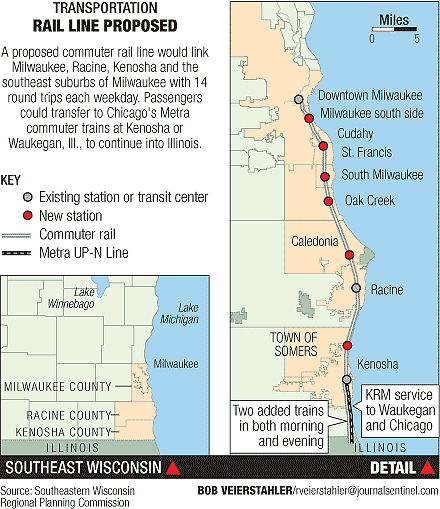
$237 million plan to link Milwaukee, Racine, Kenosha and the southern suburbs with commuter trains.
If the effort succeeds, it would bring back a mode of transportation that disappeared from Milwaukee about 40 years ago. Commuter rail lines run on existing freight tracks, connecting a major city and its suburbs. They're designed for local trips, unlike intercity Amtrak trains such as the Milwaukee-to-Chicago Hiawatha line.
Read More
BROWNFIELDS PRODUCING BIOFUELS?

Ethanol Producer magazine is reporting that researchers in Michigan are investigating the possibility of growing green crops on brownfield sites. Corn and switchgrass for ethanol production, as well as three oilseed crops for biodiesel production, were planted this year on a two-acre former industrial dump site in Oakland County, MI. The idea behind the three-year study is that marginal land, unfit for growing crops for human consumption, could be used to grow feedstocks for biofuels.
I Have The Solution to U.S. Dependence on Foreign Oil
 I have invented a product that will solve the global oil dilemma, there will no longer be any reason to fight wars over oil. My invention comes in a variety of sizes and colors and lasts about 10 years. It's environmentally friendly, producing a waste product that can be used as crop fertilizer. It does not produce carbon monoxide or smog and does not hurt the ozone layer. It runs on water, grass and weeds. It is currently available in all 50 states. It is cheap to purchase, usually costing less than $2000, and you only have to go a few miles outside of town to find one you like. Maintenance costs are generally low, and most problems can be addressed at home without the assistance of a specialist. It likes you and enjoys your company, and likes it when you rub its belly and scratch its nose. The solution to U.S. dependence on foreign oil is staring you in the face. Jump on board now, I'm looking for investors. My latest invention is going to change the world.
Thursday, November 23, 2006
Canada Backs Away From Kyoto Protocol Commitment
OTTAWA, Ontario, Canada, November 22, 2006 (ENS) - Canada cannot meet its greenhouse gas reduction commitments under the Kyoto Protocol, so Environment Canada is proceeding with a rapid roll out of new regulations that will postpone action on regulating these emissions until at least 2010. Canada has ratified the Protocol to the UN Climate Convention and is legally bound to cut emissions six percent in the five years from 2008 through 2012.
The country cannot achieve that and the government must be "realistic" said Environment Minister Rona Ambrose, who led the Canadian delegation to the UN climate conference in Nairobi last week. "Canada is 35 percent above our Kyoto target," she told the assembly of 100 fellow ministers and thousands of delegates from around the world.
Read More
The country cannot achieve that and the government must be "realistic" said Environment Minister Rona Ambrose, who led the Canadian delegation to the UN climate conference in Nairobi last week. "Canada is 35 percent above our Kyoto target," she told the assembly of 100 fellow ministers and thousands of delegates from around the world.
Read More
EPA Trashes Libraries of Documents
WASHINGTON, DC, November 22, 2006 (ENS) - The U.S. Environmental Protection Agency is rapidly dispersing its library collections to preempt Congressional intervention, according to internal emails released Monday by Public Employees for Environmental Responsibility, PEER, a national association of employees in natural resources agencies.
Contrary to promises by EPA Deputy Administrator Marcus Peacock that all of the former library materials will be made available electronically as the agency closes libraries to save money, PEER says "vast troves of unique technical reports and analyses will remain indefinitely inaccessible."
Meanwhile, many materials formerly held by the Office of Prevention, Pollution and Toxic Substances Library, in EPA's Washington DC Headquarters, were directed to be thrown into trash bins, according to reports received by PEER. This month, EPA closed this library, its only specialized library for research on health effects and properties of toxic chemicals and pesticides, without notice to either the public or affected scientists.
"By its actions, it appears that the appointed management at EPA is determined to actually reduce the sum total of human knowledge," said PEER Executive Director Jeff Ruch. "EPA is not an agency renowned for its speed, so its undue haste in dumping library holdings suggests a political agenda rather than anything resembling a rational information management plan."
In the case of the OPPTS Library, the collection is being offered to other EPA offices. What has not been immediately claimed is destined for the trash bin. PEER says the only "unique" documents that EPA is digitizing are those authored by EPA staff. Thousands of documents written or compiled by EPA contractors will remain boxed up and unavailable, either electronically or physically, as the material has not been catalogued. The EPA is spending more money closing the libraries than it asserted it would save, $2 million, from the closures.
"The dismantlement of EPA's library network has been directed from above without any assessment of the information needs of the agency, let alone outside researchers or the public," Ruch added, noting that the Senate will soon be taking up EPA's budget for the current fiscal year. "It is high time Congress weighs in before EPA completely destroys its library system."
Democrats Senator Barbara Boxer of California the incoming chair of the oversight committee for EPA, and Senator Frank Lautenberg of New Jersey are leading an effort to restore EPA's network of libraries during the current lame-duck session of Congress.
Contrary to promises by EPA Deputy Administrator Marcus Peacock that all of the former library materials will be made available electronically as the agency closes libraries to save money, PEER says "vast troves of unique technical reports and analyses will remain indefinitely inaccessible."
Meanwhile, many materials formerly held by the Office of Prevention, Pollution and Toxic Substances Library, in EPA's Washington DC Headquarters, were directed to be thrown into trash bins, according to reports received by PEER. This month, EPA closed this library, its only specialized library for research on health effects and properties of toxic chemicals and pesticides, without notice to either the public or affected scientists.
"By its actions, it appears that the appointed management at EPA is determined to actually reduce the sum total of human knowledge," said PEER Executive Director Jeff Ruch. "EPA is not an agency renowned for its speed, so its undue haste in dumping library holdings suggests a political agenda rather than anything resembling a rational information management plan."
In the case of the OPPTS Library, the collection is being offered to other EPA offices. What has not been immediately claimed is destined for the trash bin. PEER says the only "unique" documents that EPA is digitizing are those authored by EPA staff. Thousands of documents written or compiled by EPA contractors will remain boxed up and unavailable, either electronically or physically, as the material has not been catalogued. The EPA is spending more money closing the libraries than it asserted it would save, $2 million, from the closures.
"The dismantlement of EPA's library network has been directed from above without any assessment of the information needs of the agency, let alone outside researchers or the public," Ruch added, noting that the Senate will soon be taking up EPA's budget for the current fiscal year. "It is high time Congress weighs in before EPA completely destroys its library system."
Democrats Senator Barbara Boxer of California the incoming chair of the oversight committee for EPA, and Senator Frank Lautenberg of New Jersey are leading an effort to restore EPA's network of libraries during the current lame-duck session of Congress.
Tuesday, November 21, 2006
Some Photos From Today, This is Why I Still Live Here
 Rising waters, Riverside Park, Grand Rapids, Michigan
 Willow leaves, more than you can possibly imagine
 Riverside Park Lagoon, Grand Rapids, Michigan
 Giant willow, Grand Rapids
 Grand River, with a view of downtown Grand Rapids skyline.
All photos by Jerome Alicki are, of course, copyright protected. Thanks.
WATER QUALITY: Settlement Reached with West Michigan Developer

The Department of Environmental Quality has settled an enforcement action taken against Eastbrook Development Company of Kentwood that arose after the DEQ observed repeated discharges of sediment to the Rogue River, tributary channels, and wetlands in violation of Michigan's water quality protection laws. The discharges occurred at Eastbrook's Saddle Ridge construction site, a residential development in Algoma Township.
The DEQ alleged the discharges were the result of Eastbrook's failure to implement adequate soil erosion controls at the Saddle Ridge site. Discharges of sediment are a significant environmental concern due to habitat destruction and nutrient enrichment and can lead to significant reductions in water quality. The Rogue River has been designated by the Department of Natural Resources as one of a few "Natural Rivers" in the state.
Eastbrook has voluntarily entered into an agreement with the DEQ and committed to ensuring adequate maintenance of soil erosion and sedimentation control measures at the Saddle Ridge site. They also agreed to provide soil erosion control plans for future phases of development at Saddle Ridge and pay a civil fine in the amount of $37,500. Eastbrook will reimburse the DEQ for $2,200 in enforcement costs.
MiCorps Volunteer Stream Monitoring Grant and Start-Up Grant Applications now available

MiCorps provides grants for water quality monitoring in wadable streams and rivers. The monitoring primarily includes an evaluation of benthic invertebrate communities and stream habitat. The grants may be used to fund a local monitoring coordinator and/or purchase water quality monitoring supplies. MiCorps will provide training to the grantees, and the data will be used by the Michigan Department of Environmental Quality as a screening tool to identify sites requiring a more detailed assessment and as supplemental data for DEQ water resources management programs.
Agricultural Pollution: What the Hell is A CAFO?
Once again, Muskegon Chronicle writer Jeff Alexander produces high quality journalism.
Massive livestock facilities known as CAFOs, concentrated animal feeding operations, are sprouting across Michigan and neighboring states. CAFOs house thousands of animals in barns and store millions of gallons of liquid manure in lagoons until the animal waste is used to fertilize farm fields.
The volume of sewage and toxic air emissions CAFOs produce is on par with cities and industrial facilities.
One large CAFO can produce as much sewage -- in the form of animal manure -- as a city of 100,000 people. Unlike cities and factories, which must treat wastewater and control air pollution, CAFOs are allowed to spread untreated manure on the land and foul the air because the facilities are exempt from most state environmental laws.
Read More
Massive livestock facilities known as CAFOs, concentrated animal feeding operations, are sprouting across Michigan and neighboring states. CAFOs house thousands of animals in barns and store millions of gallons of liquid manure in lagoons until the animal waste is used to fertilize farm fields.
The volume of sewage and toxic air emissions CAFOs produce is on par with cities and industrial facilities.
One large CAFO can produce as much sewage -- in the form of animal manure -- as a city of 100,000 people. Unlike cities and factories, which must treat wastewater and control air pollution, CAFOs are allowed to spread untreated manure on the land and foul the air because the facilities are exempt from most state environmental laws.
Read More
Sunday, November 19, 2006
US Energy Department May Sell Surplus Mercury Stockpile
WASHINGTON, DC, November 17, 2006 (ENS) - The U.S. Department of Energy, DOE, is considering selling some 1,300 tons of surplus mercury on the international market, prompting urgent warnings from health organizations that the toxic metal would find its way back into the domestic food chain from the developing world. Word of the potential sale has prompted a formal request to the agency by Senator Barack Obama (D-IL) to keep the mercury in storage and out of the environment.
“Given that mercury is a trans-boundary pollutant that is deposited both locally and globally,” he wrote to Energy Secretary Samuel Bodman, “any strategy to reduce mercury in the environment must also include reducing the volume of mercury traded and sold in the world market.” The senator was joined by the Natural Resources Defense Council and the Mercury Policy Project in warning that U.S. mercury exports will “boomerang” back to the United States.
The DOE stockpile is nearly five times the amount exported in 2004 by all U.S. companies combined. Once used in weapons and energy technologies, the mercury is now obsolete for DOE functions and no longer of any use to the government. Mercury exports often go to poorly regulated industries in developing countries, which release it into the atmosphere. Some of that air pollution wafts over the ocean and back to the United States, contaminating ocean and freshwater fish.

“Given that mercury is a trans-boundary pollutant that is deposited both locally and globally,” he wrote to Energy Secretary Samuel Bodman, “any strategy to reduce mercury in the environment must also include reducing the volume of mercury traded and sold in the world market.” The senator was joined by the Natural Resources Defense Council and the Mercury Policy Project in warning that U.S. mercury exports will “boomerang” back to the United States.
The DOE stockpile is nearly five times the amount exported in 2004 by all U.S. companies combined. Once used in weapons and energy technologies, the mercury is now obsolete for DOE functions and no longer of any use to the government. Mercury exports often go to poorly regulated industries in developing countries, which release it into the atmosphere. Some of that air pollution wafts over the ocean and back to the United States, contaminating ocean and freshwater fish.
Add the bear to your site!

Climate Conference Agrees on Workplan for Future Emissions Cuts
NAIROBI, Kenya, November 17, 2006 (ENS) - The United Nations climate change conference wound up its two week meeting today by approving a plan to work towards limiting global warming after 2012 when the present agreement governing greenhouse gas emissions expires. The Kyoto Protocol sets legally binding emission reduction targets for 35 industrialized countries during the five years from 2008 to 2012.
In another forward step, developing countries will receive financial and technical help in adapting to the effects of global warming, the conference agreed, as thousands of participants from 180 countries went home with dire warnings about potential climate calamities ringing in their ears...
Read the rest...
In another forward step, developing countries will receive financial and technical help in adapting to the effects of global warming, the conference agreed, as thousands of participants from 180 countries went home with dire warnings about potential climate calamities ringing in their ears...
Read the rest...
Saturday, November 18, 2006
CASINO ROYALE, THE BEST BOND MOVIE EVER!!!
 Holy crap kids, I just got back from the theatre and I gotta tell ya, I was just amazed, completely blown away. Anyone who know me knows that I love Bond movies and have seen all 20 multiple times. This is hands down the best. Live and Let Die and Her Majesty's Secret Service, previously my two favorites, pale in comparison.
CLICK HERE IF YOU HAVEN'T SEEN THE FULL 3-MINUTE TRAILER YET!
Daniel Craig is the new Bond. He makes Sean Connery and Roger Moore's versions of 007 look like complete pussies. Pierce Brosnan is a dainty little girl in comparison. Craig's Bond is no gentleman. He is a coniving, sinister, incredibly strong and agile wanton killer. Gone are the dumbass John Cleese "Q" scenes, gone are the sappy Moneypenny flirtations. No, this guy has only one purpose, to fucking kill you!
Bond takes on the worst of the worst, terrorists plotting to blow up planes at airports. Yes, the world is full of terrorists who hate America and Britain. Yes, the world is full of evil men who finance terrorism. Yes, 007 hunts them down and mercilessly kills them all!! I was on the edge of my seat after the first 30 seconds of this movie, and it continued to slap me in the face for another 2 hours.
Many a power-hungry madman has tried to torture Bond before, but not like this. This is not Goldfinger's laser beam. This is a torture scene that would make the guards at Abu Ghraib and Auschwitz wince! Bond looks up at his captor and with an horribly evil laugh delivers the best Bond line ever, "I'm going to tell everyone that you died while scratching my balls."
Bond Girls: "OHHHHHH JAMES!!!"
 Eva Green! The best cleavage ever on a movie screen, she kicks all the Octopussy' girls collective butts. You can't find a more beautiful and talented woman than the phenomenal Eva Green. Oh yeah, Bond gets his willy waxed. A lot!
 Catherine Murino makes Ursula Andress look like a dirty, mangy old schnauzer. There's a bunch of other actors, but after seeing Murino you pretty much forget that anyone else is in this movie.
Based on the first Bond book written by Ian Fleming, the story recounts the creation of 007. Martin Campbell directs, from a screenplay by Neal Purvis & Robert Wade and Paul Haggis. James Bond's first 007 mission leads him to Le Chiffre (Mads Mikkelsen), banker to the world's terrorists. In order to stop him, and bring down the terrorist network, Bond must beat Le Chiffre in a high-stakes poker game at Casino Royale. Bond is initially annoyed when a beautiful British Treasury official, Vesper Lynd (Eva Green) is assigned to deliver his stake for the game and watch over the government's money. But, as Bond and Vesper survive a series of attacks by Le Chiffre and his henchmen, a mutual attraction develops. And develops again, and again, and again. DAMN! I was blushing!
Judi Dench is back as M. The Aston Martin is back too, complete with high-tech dashboard gizmos.
Wednesday, November 15, 2006
Ford & Honda Join Toyota in Using Safer Plastics for Car Interiors
Today, Ann Arbor's Ecology Center -- the leading watchdog on toxic chemicals in cars - released its second annual Automotive Plastics Report, which grades the eight leading car manufacturers on their plastics policies and practices. Although all companies can still make great strides in order to be completely safe for the environment and public health, Ford and Honda have made significant improvements since last year, joining Toyota as leaders in the movement toward using sustainable plastics in indoor auto parts.
According to the American Plastics Council, the average vehicle uses 250 lbs of plastic. A significant proportion of this is used to make interior auto parts such as seat cushions, armrests, steering wheels, wire insulation and dashboards. Many of these plastics are made with harmful chemical additives, such as phthalates in polyvinyl chloride (PVC) and brominated flame retardants (BFRs). These additives off-gas and leach from plastic parts contaminating the air and dust inside vehicles, putting drivers and passengers at risk. Many of the plastics are also not easily recycled and therefore usually end up in landfills or incinerators where their chemical additives contaminate the land, water and air. Incinerating these chemicals creates dangerous byproducts including dioxin, a carcinogen that is linked to serious reproductive, development and immune system problems.
The 2006 Automotive Plastics Report focused on three areas in which some automakers are making significant progress, including: 1) Use of sustainably-sourced bio-based materials; 2) Improving interior air quality; and 3) Reducing the use of PVC.
"Ford, Honda and Toyota's leading edge efforts in the use of bio-based materials, improving interior air quality and reducing PVC clearly put them ahead of the pack," said report author Claudette Juska of the Ecology Center. 'These issues are important to consumers and show a broader commitment to healthier, more sustainable vehicles.'
BIO-BASED MATERIALS : Automakers have stepped up their efforts to use bio-based materials that reduce petroleum use, life-cycle carbon emissions and vehicle weight. Toyota has lead this movement by pioneering the development of an "Eco Plastic" made from sugar cane or corn, and building a pilot plant to produce it. DaimlerChrysler increased the use of renewable materials in some vehicles by up to 98% over previous models by using natural materials such as flax and abaca fibers. Ford has developed a soy-based foam, and will soon begin using a bio-fabric for seating.
INTERIOR AIR QUALITY: Plastic components contain chemical additives that off-gas and contribute to "new car smell." When inhaled these chemicals can cause strong allergic reactions as well as serious long-term health problems. Ford is the only automaker that has certified vehicles (4 so far) using an independent, third party certification standard for interior air quality – the TUV Rheinland Group’s "Allergy-Free" standard. This standard targets a broad set of persistent, toxic chemicals that have adverse effects on the environment and human health. Toyota has set a goal to reduce in-cabin volatile organic compound (VOC) levels in all vehicles globally by 2010, however they did not say to what levels they will be reduced. Honda and Nissan are also reducing in-cabin VOC's in order to comply with the voluntary Japanese Auto Manufacturers Association agreement.
PVC: PVC is difficult to recycle and contains dangerous chemical additives. Honda has set a goal to "apply PVC-free applications across its entire North American product line wherever feasible." The company has already removed PVC from most applications, demonstrating that virtually PVC-free vehicles are possible to manufacture. Hyundai, Toyota and DaimlerChrysler have provided examples of some indoor auto parts that have been replaced with PVC-free alternatives in certain vehicle lines, however they have not provided quantitative measures of progress.
OVERALL GRADES: While some car companies have made improvements from last year regarding their use of sustainable plastics, they still have a long way to go. Following are how they ranked overall in the 2006 report: Toyota C+, Ford C, Honda C, DaimlerChrysler D+, General Motors D, Hyundai D, Nissan D and Volkswagen D-. Together these manufacturers account for 94% of total vehicle sales in the U.S.
RECOMMENDATIONS: In order to reduce the environmental and human health impacts from plastic materials used in vehicles the report recommends that automakers: 1) Increase the use of sustainably-sourced bio-based materials; 2) Certify all vehicles to an interior air quality standard; and 3) Accelerate efforts to eliminate problematic halogenated substances, such as PVC and brominated flame retardants.
According to the American Plastics Council, the average vehicle uses 250 lbs of plastic. A significant proportion of this is used to make interior auto parts such as seat cushions, armrests, steering wheels, wire insulation and dashboards. Many of these plastics are made with harmful chemical additives, such as phthalates in polyvinyl chloride (PVC) and brominated flame retardants (BFRs). These additives off-gas and leach from plastic parts contaminating the air and dust inside vehicles, putting drivers and passengers at risk. Many of the plastics are also not easily recycled and therefore usually end up in landfills or incinerators where their chemical additives contaminate the land, water and air. Incinerating these chemicals creates dangerous byproducts including dioxin, a carcinogen that is linked to serious reproductive, development and immune system problems.
The 2006 Automotive Plastics Report focused on three areas in which some automakers are making significant progress, including: 1) Use of sustainably-sourced bio-based materials; 2) Improving interior air quality; and 3) Reducing the use of PVC.
| Bio-Based Materials | Interior Air Quality | PVC Reduction |
"Ford, Honda and Toyota's leading edge efforts in the use of bio-based materials, improving interior air quality and reducing PVC clearly put them ahead of the pack," said report author Claudette Juska of the Ecology Center. 'These issues are important to consumers and show a broader commitment to healthier, more sustainable vehicles.'
BIO-BASED MATERIALS : Automakers have stepped up their efforts to use bio-based materials that reduce petroleum use, life-cycle carbon emissions and vehicle weight. Toyota has lead this movement by pioneering the development of an "Eco Plastic" made from sugar cane or corn, and building a pilot plant to produce it. DaimlerChrysler increased the use of renewable materials in some vehicles by up to 98% over previous models by using natural materials such as flax and abaca fibers. Ford has developed a soy-based foam, and will soon begin using a bio-fabric for seating.
INTERIOR AIR QUALITY: Plastic components contain chemical additives that off-gas and contribute to "new car smell." When inhaled these chemicals can cause strong allergic reactions as well as serious long-term health problems. Ford is the only automaker that has certified vehicles (4 so far) using an independent, third party certification standard for interior air quality – the TUV Rheinland Group’s "Allergy-Free" standard. This standard targets a broad set of persistent, toxic chemicals that have adverse effects on the environment and human health. Toyota has set a goal to reduce in-cabin volatile organic compound (VOC) levels in all vehicles globally by 2010, however they did not say to what levels they will be reduced. Honda and Nissan are also reducing in-cabin VOC's in order to comply with the voluntary Japanese Auto Manufacturers Association agreement.
PVC: PVC is difficult to recycle and contains dangerous chemical additives. Honda has set a goal to "apply PVC-free applications across its entire North American product line wherever feasible." The company has already removed PVC from most applications, demonstrating that virtually PVC-free vehicles are possible to manufacture. Hyundai, Toyota and DaimlerChrysler have provided examples of some indoor auto parts that have been replaced with PVC-free alternatives in certain vehicle lines, however they have not provided quantitative measures of progress.
OVERALL GRADES: While some car companies have made improvements from last year regarding their use of sustainable plastics, they still have a long way to go. Following are how they ranked overall in the 2006 report: Toyota C+, Ford C, Honda C, DaimlerChrysler D+, General Motors D, Hyundai D, Nissan D and Volkswagen D-. Together these manufacturers account for 94% of total vehicle sales in the U.S.
RECOMMENDATIONS: In order to reduce the environmental and human health impacts from plastic materials used in vehicles the report recommends that automakers: 1) Increase the use of sustainably-sourced bio-based materials; 2) Certify all vehicles to an interior air quality standard; and 3) Accelerate efforts to eliminate problematic halogenated substances, such as PVC and brominated flame retardants.
Bush Sued to Force National Climate Assessment
From Environmental News Service
SAN FRANCISCO - A coalition of conservation groups filed suit today against the Bush administration for not completing a national assessment of the impact of global warming on the environment, economy, human health and human safety of the United States. The assessment, due in November of 2004, is required by the Global Change Research Act of 1990. Plaintiffs in the lawsuit are the Center for Biological Diversity, Friends of the Earth, and Greenpeace.
“This administration has denied and suppressed the science of global warming at every turn,” said Julie Teel of the Center for Biological Diversity and one of the attorneys arguing the case. “The Bush administration was so threatened by the profound revelations of the 2000 assessment that it killed the 2004 update," said Teel. "They know the update will affirm what the world’s leading climate scientists believe: that we need immediate and substantial cuts in greenhouse gas emissions. It is a complete head-in-the-sand approach to a looming global catastrophe.”
The last national assessment, "Climate Change Impacts on the United States: The Potential Consequences of Climate Variability and Change," was issued October 31, 2000. It found that humans are contributing significantly to global warming and that current global warmth is "unprecedented." Scientific conclusions within the 2000 assessment predicted a doubling or tripling of heat-related deaths, intensified floods and droughts, and the swamping of coastlines by rising seas and fiercer storms.
Teel says that not only has the administration failed to issue an updated national assessment, but it worked to suppress the findings of the 2000 assessment. “Unfortunately, the Bush administration has not complied with the law, nor has it been truthful with the American people or the world about the science of global warming,” said Danielle Fugere of Friends of the Earth. “This administration is better known for censoring government climate scientists than for providing accurate information.”
Christopher Miller of Greenpeace said, “The Bush administration’s disastrous business-as-usual approach to climate change is so isolated from the desires of mainstream America and the rest of the world that it cannot continue for long."
SAN FRANCISCO - A coalition of conservation groups filed suit today against the Bush administration for not completing a national assessment of the impact of global warming on the environment, economy, human health and human safety of the United States. The assessment, due in November of 2004, is required by the Global Change Research Act of 1990. Plaintiffs in the lawsuit are the Center for Biological Diversity, Friends of the Earth, and Greenpeace.
“This administration has denied and suppressed the science of global warming at every turn,” said Julie Teel of the Center for Biological Diversity and one of the attorneys arguing the case. “The Bush administration was so threatened by the profound revelations of the 2000 assessment that it killed the 2004 update," said Teel. "They know the update will affirm what the world’s leading climate scientists believe: that we need immediate and substantial cuts in greenhouse gas emissions. It is a complete head-in-the-sand approach to a looming global catastrophe.”
The last national assessment, "Climate Change Impacts on the United States: The Potential Consequences of Climate Variability and Change," was issued October 31, 2000. It found that humans are contributing significantly to global warming and that current global warmth is "unprecedented." Scientific conclusions within the 2000 assessment predicted a doubling or tripling of heat-related deaths, intensified floods and droughts, and the swamping of coastlines by rising seas and fiercer storms.
Teel says that not only has the administration failed to issue an updated national assessment, but it worked to suppress the findings of the 2000 assessment. “Unfortunately, the Bush administration has not complied with the law, nor has it been truthful with the American people or the world about the science of global warming,” said Danielle Fugere of Friends of the Earth. “This administration is better known for censoring government climate scientists than for providing accurate information.”
Christopher Miller of Greenpeace said, “The Bush administration’s disastrous business-as-usual approach to climate change is so isolated from the desires of mainstream America and the rest of the world that it cannot continue for long."
Environmental Justice and the End of Affirmative Action in Michigan
In 1993, I had the opportunity to participate in one of the first undergraduate seminars on Environmental Justice offered in the US. I have been distinctly aware of the disparity in the application of environmental regulation (environmental racism) ever since. Environmental Justice is now a nationwide movement and a belief that everyone deserves a healthy environment, for themselves and their children, regardless of race, ethnicity or poverty.
November 7th was the day voters in Michigan rejected affirmative action (Proposal 2) and voted for a state constitutional amendment called the Michigan Civil Rights Initative. The question that my professor would surely have posed on the final exam in my seminar is: What effect does a ban on affirmative action programs on the state level have - if any - on the environmental justice movement and the application of environmental policy in Michigan? Where are we now headed? How does the new Michigan civil rights amendment guarantee equity in the application of environmental regulation?
Right now, I can't provide an answer. Here's your chance to help me.
My questions for you:
How did you vote on Proposal 2?
Did you consider how Proposal 2 would effect environmental programs or policies in Michigan before you voted?
Are we creating a more just and fair society where everyone will benefit?
Is this new path that we have embarked upon sustainable?
Which state environmental policy and regulations will Proposal 2 effect?
Need a more complex definition of EJ? According to the University of Michigan Dept. of Natural Resources and Environment: environmental justice is concerned with the inequalities that arise from social, political and environmental decision making, actions and policies. Environmental injustice gives rise to class, gender and racial disparities such as the increased likelihood of being exposed to environmental hazards; negative impacts of environmental processes and policies; poverty; public health; worker rights and occupational safety; the segregation of jobs, housing, communities, facilities, and public conveyances; unequal access to environmental amenities like parks and playgrounds; inadequate maintenance of open space, streets, and facilities; inequality in the delivery of environmental services like garbage removal and transportation; the appropriation of land, destruction of indigenous cultures, and the abrogation of traditional treaty rights; and the expulsion or removal of people from particular territories.
Environmental justice is also concerned with the preservation of land, and the environmental practices and cultures of marginalized peoples; developing sustainable communities; providing multi-cultural environmental education; safeguarding human rights; and shaping new environmental discourses, ethics, policies, and plans for the twenty-first century.
Researchers have documented disproportionate exposure to hazardous conditions in communities of color and low-income communities in the U.S. Canada, and some European countries. Hazardous environmental conditions (arising from North-South relations) have been identified in several developing countries. Understanding the processes that give rise to environmental inequalities is a necessity for achieving the goal of a sustainable society.
At first glance, It seems to me that a lack of affirmative action will encourage environmental inequality. Don't let my opinion sway you, I could be wrong. As always your comments are desired and encouraged.
Educate yourself:
 Earth Democracy: Justice, Sustainability, and Peace
by Vandana Shiva
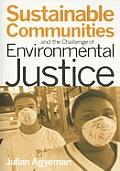 Sustainable Communities and the Challenge of Environmental Justice
by Julian Agyeman
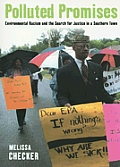 Polluted Promises: Environmental Racism and the Search for Justice in a Southern Town
by Melissa Checker
November 7th was the day voters in Michigan rejected affirmative action (Proposal 2) and voted for a state constitutional amendment called the Michigan Civil Rights Initative. The question that my professor would surely have posed on the final exam in my seminar is: What effect does a ban on affirmative action programs on the state level have - if any - on the environmental justice movement and the application of environmental policy in Michigan? Where are we now headed? How does the new Michigan civil rights amendment guarantee equity in the application of environmental regulation?
Right now, I can't provide an answer. Here's your chance to help me.
My questions for you:
Need a more complex definition of EJ? According to the University of Michigan Dept. of Natural Resources and Environment: environmental justice is concerned with the inequalities that arise from social, political and environmental decision making, actions and policies. Environmental injustice gives rise to class, gender and racial disparities such as the increased likelihood of being exposed to environmental hazards; negative impacts of environmental processes and policies; poverty; public health; worker rights and occupational safety; the segregation of jobs, housing, communities, facilities, and public conveyances; unequal access to environmental amenities like parks and playgrounds; inadequate maintenance of open space, streets, and facilities; inequality in the delivery of environmental services like garbage removal and transportation; the appropriation of land, destruction of indigenous cultures, and the abrogation of traditional treaty rights; and the expulsion or removal of people from particular territories.
Environmental justice is also concerned with the preservation of land, and the environmental practices and cultures of marginalized peoples; developing sustainable communities; providing multi-cultural environmental education; safeguarding human rights; and shaping new environmental discourses, ethics, policies, and plans for the twenty-first century.
Researchers have documented disproportionate exposure to hazardous conditions in communities of color and low-income communities in the U.S. Canada, and some European countries. Hazardous environmental conditions (arising from North-South relations) have been identified in several developing countries. Understanding the processes that give rise to environmental inequalities is a necessity for achieving the goal of a sustainable society.
At first glance, It seems to me that a lack of affirmative action will encourage environmental inequality. Don't let my opinion sway you, I could be wrong. As always your comments are desired and encouraged.
Educate yourself:
 Earth Democracy: Justice, Sustainability, and Peace
by Vandana Shiva
 Sustainable Communities and the Challenge of Environmental Justice
by Julian Agyeman
 Polluted Promises: Environmental Racism and the Search for Justice in a Southern Town
by Melissa Checker
Subscribe to:
Posts (Atom)