Port Hope, in Huron County, just landed a $750,000 Brownfield Redevelopment Loan to be used to clean-up nine individual parcels located near the shore of Lake Huron. The Port Hope Redevelopment Project is located on 24 acres near downtown that was formerly a wastewater treatment plant, grain elevator, tannery, a train depot area, and petroleum distribution center. The funding announced today was awarded as a part of Govenor Granholm's "Jobs Today/Jobs Tomorrow" initiative.
Hope for Port Hope! Private investment of $19,000,000 is anticipated. This has the potential to create 25 full-time jobs in a village of approximately 300. The new use for the properties will be residential units near the lakeshore, and commercial units near the downtown corridor.
The state of Michigan's Brownfield Redevelopment Grant and Loan Program provides funds to local government for clean-up of brownfield properties where redevelopment is proposed. Brownfield properties are vacant or abandoned properties with known or suspected chemical contamination. The Brownfield Redevelopment Grant and Loan Program has provided $129 million for 303 projects statewide since it began in 1988.
There is, of course, much more to be done. There are a lot of toxic chemical dump sites in Michigan.
Tuesday, October 31, 2006


Monday, October 30, 2006
Michigan Getting Tough with Mercury Polluters
The Michigan Department of Environmental Quality and Department of Attorney General announced today that the state has entered into an agreement with The Cleveland-Cliffs Iron Company (Cliffs) to resolve issues related to mercury contamination in Deer Lake, north of Ishpeming.
The company has agreed to restore the quality of Deer Lake by assuring that the present water level of the lake is maintained, addressing sources of mercury to the lake, and monitoring the mercury level of fish in the lake, notifying those results to the public. Cliffs will also hand-over extensive acreage, properties, easements and rights-of-way to the state of Michigan that will dramatically increase public access to Deer Lake and other lakes and rivers in the area.
The company will also establish a Deer Lake restoration fund in order to create and upgrade public access to recreational areas and to restrict development in order to protect the water quality, maintain the aesthetics, and preserve the woodlands along the shores of Deer Lake. 775 acres and 34,000 feet of shoreline of Deer Lake will be deeded to local government and 541 acres along the Carp River downstream of the Deer Lake dam will be deeded to the state of Michigan. Cliffs will also provide funding to a dam maintenance account that will ensure the dam remains properly maintained.
Cleveland-Cliffs will also provide acreage, easements, and financial support to create or enhance the use of, and public access to, a number of other Marquette County lakes, rivers, streams, and impoundments. This work will include improved access to the waters, and will offer additional recreational opportunities in the area.
The company has agreed to restore the quality of Deer Lake by assuring that the present water level of the lake is maintained, addressing sources of mercury to the lake, and monitoring the mercury level of fish in the lake, notifying those results to the public. Cliffs will also hand-over extensive acreage, properties, easements and rights-of-way to the state of Michigan that will dramatically increase public access to Deer Lake and other lakes and rivers in the area.
The company will also establish a Deer Lake restoration fund in order to create and upgrade public access to recreational areas and to restrict development in order to protect the water quality, maintain the aesthetics, and preserve the woodlands along the shores of Deer Lake. 775 acres and 34,000 feet of shoreline of Deer Lake will be deeded to local government and 541 acres along the Carp River downstream of the Deer Lake dam will be deeded to the state of Michigan. Cliffs will also provide funding to a dam maintenance account that will ensure the dam remains properly maintained.
Cleveland-Cliffs will also provide acreage, easements, and financial support to create or enhance the use of, and public access to, a number of other Marquette County lakes, rivers, streams, and impoundments. This work will include improved access to the waters, and will offer additional recreational opportunities in the area.
Sunday, October 29, 2006
Surfing the Grand River in Grand Haven, Michigan
Here's an awesome video made last week of two guys surfing the the mouth of the Grand River, at the channel where it flows into Lake Michigan. If you know these guys names let me know, I'd like to buy them a beer! That water is seriously cold.
Friday, October 27, 2006
Black Bear Book Recommendation
 Paper or plastic? Bus or car? Old house or new? Cloth diapers or disposables? Some choices have a huge impact on the environment; others are of negligible importance. To those of us who care about our quality of life and what is happening to the earth, this is a vastly important issue. In these pages, the Union of Concerned Scientists help inform consumers about everyday decisions that significantly affect the environment. For example, a few major decisions - such as the choice of a house or vehicle - have such a disproportionately large affect on the environment that minor environmental infractions shrink by comparison.
This book identifies the 4 Most Significant Consumer Related Environmental Problems, the 7 Most Damaging Spending Categories, 11 Priority Actions, and 7 Rules for Responsible Consumption. Learn what you can do to have a truly significant impact on our world from the people who are at the forefront of scientific research.
Thursday, October 26, 2006
Vote Environment November 7th!
 Bears can't vote, but you can. Get to the polls on November 7th and vote Environment. If you're not convinced, watch Mr. Bear's cartoon!
$13.9 Million Clean Air Act Settlement: Major Pollution Reductions in Eight States
A multi-state Clean Air Act settlement, reached today with oilseed processor Bunge North America Inc. and three of its subsidiaries, will eliminate more than 2,200 tons of harmful pollution emissions per year when fully implemented. The $13.9 million settlement covers 12 plants in eight states, each of which has joined the United States as a co-plaintiff.
The settlement covers eleven soybean processing plants – in Decatur, Ala.; Marks, Miss.; Destrehan, La.; Emporia, Kan.; Council Bluffs, Iowa; Delphos, Ohio; Marion, Ohio; Decatur, Ind.; Morristown, Ind.; Cairo, Ill.; and Danville, Ill. – as well as a corn dry mill extraction plant also located in Danville, Ill. The U.S. alleges that at some or all of these 12 plants, Bunge or a subsidiary violated the CAA by constructing major modifications that increased emissions without obtaining pre-construction permits and without complying with applicable standards of performance for new air pollution sources.
The settlement, which follows other settlements with oilseed processors, including Cargill Inc. and Archer Daniels Midland Co. (ADM), will continue the imposition of lower emission standards on soybean processing plants and will also require other pollution reduction projects, including piloting of a new technology to reduce harmful emissions from coal-burning boilers. When fully implemented, the settlement will eliminate more than 2,200 tons per year of harmful emissions of smog-forming volatile organic compounds (VOCs), nitrogen oxides (NOx), sulfur dioxide (SO2) and particulate matter (PM).
"This settlement will result in healthier air in the 11 airsheds where the plants are located. Eliminating over 1,000 tons of emissions of volatile organic compounds, for example, will reduce the formation of ground-level ozone, a pollutant that irritates the lungs and exacerbates diseases such as asthma," said Sue Ellen Wooldridge, assistant attorney general for the Justice Department's Environment and Natural Resources Division. "We remain committed to working with EPA and the states to bring companies and industries into compliance with the laws that protect public health and our environment."
Bunge, a multi-state agribusiness based in St. Louis, is the North American operating arm of multinational corporation Bunge Limited, and a leading oilseed processor, corn dry miller, and U.S. exporter of soybeans and soybean-derived products. To extract oil from soybeans or corn, Bunge and its subsidiaries use volatile organic solvents. Emissions of VOCs result because some of the solvent escapes to the atmosphere. NOx, SO2 and PM are emitted when fuel is burned to provide heat for the process; additional PM is emitted by handling and preparation of the soybeans or corn.
Once fully implemented, the settlement will cause Bunge and its subsidiaries to reduce their emissions of harmful air pollutants as follows:
· Using engineering approaches appropriate for each plant, the 12 plants' emissions of VOCs, including n-hexane, which is a listed hazardous air pollutant, will be reduced by 1,122 tons per year (tpy).
· A host of pollution control projects at the plants, including the innovative technology pilot, will reduce emissions of SO2 by 574 tpy, of NOx by 278 tpy, and of PM by 258 tpy.
The emission reduction projects will cost an estimated $12 million. Bunge will also pay a $625,000 civil penalty, which will be divided among the federal government and the eight states. In addition, Bunge will spend more than $1.25 million to implement supplemental environmental projects which go beyond mere compliance to achieve additional environmental benefits. The supplemental projects, which were selected by and will be supervised by the eight states, include removal of mercury, lead or asbestos from schools in Louisiana, providing hazardous materials response equipment and training in Illinois and Mississippi, providing environmental education in Kansas, abatement of residential lead contamination in Illinois, and retrofitting diesel school buses or other diesel vehicles in Indiana, Ohio, Kansas, Iowa and Alabama.
The settlement covers eleven soybean processing plants – in Decatur, Ala.; Marks, Miss.; Destrehan, La.; Emporia, Kan.; Council Bluffs, Iowa; Delphos, Ohio; Marion, Ohio; Decatur, Ind.; Morristown, Ind.; Cairo, Ill.; and Danville, Ill. – as well as a corn dry mill extraction plant also located in Danville, Ill. The U.S. alleges that at some or all of these 12 plants, Bunge or a subsidiary violated the CAA by constructing major modifications that increased emissions without obtaining pre-construction permits and without complying with applicable standards of performance for new air pollution sources.
The settlement, which follows other settlements with oilseed processors, including Cargill Inc. and Archer Daniels Midland Co. (ADM), will continue the imposition of lower emission standards on soybean processing plants and will also require other pollution reduction projects, including piloting of a new technology to reduce harmful emissions from coal-burning boilers. When fully implemented, the settlement will eliminate more than 2,200 tons per year of harmful emissions of smog-forming volatile organic compounds (VOCs), nitrogen oxides (NOx), sulfur dioxide (SO2) and particulate matter (PM).
"This settlement will result in healthier air in the 11 airsheds where the plants are located. Eliminating over 1,000 tons of emissions of volatile organic compounds, for example, will reduce the formation of ground-level ozone, a pollutant that irritates the lungs and exacerbates diseases such as asthma," said Sue Ellen Wooldridge, assistant attorney general for the Justice Department's Environment and Natural Resources Division. "We remain committed to working with EPA and the states to bring companies and industries into compliance with the laws that protect public health and our environment."
Bunge, a multi-state agribusiness based in St. Louis, is the North American operating arm of multinational corporation Bunge Limited, and a leading oilseed processor, corn dry miller, and U.S. exporter of soybeans and soybean-derived products. To extract oil from soybeans or corn, Bunge and its subsidiaries use volatile organic solvents. Emissions of VOCs result because some of the solvent escapes to the atmosphere. NOx, SO2 and PM are emitted when fuel is burned to provide heat for the process; additional PM is emitted by handling and preparation of the soybeans or corn.
Once fully implemented, the settlement will cause Bunge and its subsidiaries to reduce their emissions of harmful air pollutants as follows:
· Using engineering approaches appropriate for each plant, the 12 plants' emissions of VOCs, including n-hexane, which is a listed hazardous air pollutant, will be reduced by 1,122 tons per year (tpy).
· A host of pollution control projects at the plants, including the innovative technology pilot, will reduce emissions of SO2 by 574 tpy, of NOx by 278 tpy, and of PM by 258 tpy.
The emission reduction projects will cost an estimated $12 million. Bunge will also pay a $625,000 civil penalty, which will be divided among the federal government and the eight states. In addition, Bunge will spend more than $1.25 million to implement supplemental environmental projects which go beyond mere compliance to achieve additional environmental benefits. The supplemental projects, which were selected by and will be supervised by the eight states, include removal of mercury, lead or asbestos from schools in Louisiana, providing hazardous materials response equipment and training in Illinois and Mississippi, providing environmental education in Kansas, abatement of residential lead contamination in Illinois, and retrofitting diesel school buses or other diesel vehicles in Indiana, Ohio, Kansas, Iowa and Alabama.
Friday, October 13, 2006
Innovation grants benefit local students
Projects being done by 42 student design teams received $420,000 in grants from EPA to research and develop sustainable environmental solutions. Students at Southern Illinois University will develop green roofs made of plants for improved storm water management, increased energy conservation, reduced urban heat island effects, and extended roof life - - all of which means saving dollars! Students at the University of Tennessee will test whether algae (one-celled plants) can generate enough hydrogen energy in a biohydrogen facility to produce transportation fuel for a city of 100,000 people.
Started in 2004, the People, Prosperity and the Planet (P3) sustainability design competition encourages university teams to develop projects that are: Environmentally protective - use or release less toxic chemicals, efficiently use natural resources - conserve resources for future generations, and economically competitive - make a profit.
Businesses are taking notice - - last year, four P3 design projects became new commercial ventures.
A P3 winner in 2005 from Oberlin College designed a system to monitor energy and water use in colleges with easy-to-read, real-time data on energy at the dormitory level, allowing the school to reduce energy costs by pinpointing areas of overuse. This project is now a small business with clients that include Southface in Atlanta, Ga.; The Zenergy Group in Orlando, Fla.; Duke University; Sidwell Friends School in Washington, D.C., and others.
Another 2005 P3 Award winner from the University of California at Berkeley has developed a technology that households can use to disinfect contaminated water. The team has been working with the Mexican Institute of Water Technology and the National Council for the Promotion of Education in Mexico and Haiti Outreach: Pwoje Espwa (HOPE) in Haiti.
There will be demonstrations of student projects on the National Mall in Washington, D.C., in next April when the 42 teams will compete for the EPA's P3 Award. The P3 award is given to the highest-rated student designs. The award includes additional funding up to $75,000 that enables the teams to further develop their designs for sustainability, test their projects in the field, and move the designs to the marketplace. The National Academy of Engineering, part of the National Academies, will convene a panel to evaluate and recommend the award winners who will be chosen by the EPA.
EPA is now requesting applications for the 2007 P3 National Student Design Competition for Sustainability. EPA plans to award up to 50 grants to student teams for a maximum of $10,000 in the autumn of 2007. The P3 competition is open to teams of students attending colleges, universities and other post-secondary educational institutions. Interdisciplinary teams are strongly encouraged, including representatives from multiple engineering departments and/or departments such as chemistry, architecture, industrial design, economics, policy, social sciences, and business.
Started in 2004, the People, Prosperity and the Planet (P3) sustainability design competition encourages university teams to develop projects that are: Environmentally protective - use or release less toxic chemicals, efficiently use natural resources - conserve resources for future generations, and economically competitive - make a profit.
Businesses are taking notice - - last year, four P3 design projects became new commercial ventures.
A P3 winner in 2005 from Oberlin College designed a system to monitor energy and water use in colleges with easy-to-read, real-time data on energy at the dormitory level, allowing the school to reduce energy costs by pinpointing areas of overuse. This project is now a small business with clients that include Southface in Atlanta, Ga.; The Zenergy Group in Orlando, Fla.; Duke University; Sidwell Friends School in Washington, D.C., and others.
Another 2005 P3 Award winner from the University of California at Berkeley has developed a technology that households can use to disinfect contaminated water. The team has been working with the Mexican Institute of Water Technology and the National Council for the Promotion of Education in Mexico and Haiti Outreach: Pwoje Espwa (HOPE) in Haiti.
There will be demonstrations of student projects on the National Mall in Washington, D.C., in next April when the 42 teams will compete for the EPA's P3 Award. The P3 award is given to the highest-rated student designs. The award includes additional funding up to $75,000 that enables the teams to further develop their designs for sustainability, test their projects in the field, and move the designs to the marketplace. The National Academy of Engineering, part of the National Academies, will convene a panel to evaluate and recommend the award winners who will be chosen by the EPA.
EPA is now requesting applications for the 2007 P3 National Student Design Competition for Sustainability. EPA plans to award up to 50 grants to student teams for a maximum of $10,000 in the autumn of 2007. The P3 competition is open to teams of students attending colleges, universities and other post-secondary educational institutions. Interdisciplinary teams are strongly encouraged, including representatives from multiple engineering departments and/or departments such as chemistry, architecture, industrial design, economics, policy, social sciences, and business.
Monday, September 25, 2006
West Michigan Renewable Energy Conference
Meeting MI’s Energy Challenges With RENEWABLE Resources – from Earth, Air and Sun
A one-day, three-part, fast-paced workshop on renewable energy For policy makers and citizen constituents.
Saturday, September 30, 2006
Registration and Continental Breakfast at 8:00 a.m.
Conservation Center
Dwight Lydell Chapter of the Izaak Walton League, Host
5641 Myers Lake Road, Cannon Township
Part I: The State of Our Energy Supply: providing the context – global, state, local
Aaron Wissner, Educator and Activist, Local leader in the international grassroots Peak Oil awareness campaign, Founder of Local Future Network.
Part II: Options and opportunities: the promise of renewables
Tom Cary: Building & Sustaining Local Economies, Coordinator of Sustainable Agriculture and Local Food Systems, WMEAC
Steven B. Smiley: Community Power – A Renewable Energy Policy for Michigan
Co-Founder of the Great Lakes Renewable Resource Institute, Owner/President of Bay Energy Services, Consultant, Educator, Systems Designer
Mark Bauer: Solar & Wind Energy – Michigan’s Alternative Future,
Entrepreneur, Wind and Solar Systems Installations
Sarah Lineberry: Biomass to Methane to Electricity
Biomass Project Manager for GVSU
At the Michigan Alternative and Renewable Energy Center (MAREC)
Gary Willey: Switchgrass - a Cellulosic Alternative Biofuel
Switchgrass Advocate
Part III: Public policy implications: paving the way for change
A Panel Discussion moderated by Aaron Wissner, with panelists Steven B. Smiley and Jennifer Alvarado of Great Lakes Renewable Energy Association
Presentations begin promptly at 8:30 and the panel discussion is scheduled to terminate at 4:00.
There is a one and one-half hour lunch component that includes mini, conversational-style presentations out-of-doors, weather-permitting, in covered pavilions. The fee schedule below includes a box lunch, the continental breakfast and beverages and light snacks at mid-morning and mid-afternoon breaks.
The fee per person is $20.00; $30.00 per couple. Students $10.00. Pre-paid registrations received by September 25 may be discounted 10%, should be made payable to Izaak Walton League and mailed to:
Bob Stegmier,IWLA
5285 Windmill Dr.
Rockford, MI 49341
A one-day, three-part, fast-paced workshop on renewable energy For policy makers and citizen constituents.
Saturday, September 30, 2006
Registration and Continental Breakfast at 8:00 a.m.
Conservation Center
Dwight Lydell Chapter of the Izaak Walton League, Host
5641 Myers Lake Road, Cannon Township
Part I: The State of Our Energy Supply: providing the context – global, state, local
Aaron Wissner, Educator and Activist, Local leader in the international grassroots Peak Oil awareness campaign, Founder of Local Future Network.
Part II: Options and opportunities: the promise of renewables
Tom Cary: Building & Sustaining Local Economies, Coordinator of Sustainable Agriculture and Local Food Systems, WMEAC
Steven B. Smiley: Community Power – A Renewable Energy Policy for Michigan
Co-Founder of the Great Lakes Renewable Resource Institute, Owner/President of Bay Energy Services, Consultant, Educator, Systems Designer
Mark Bauer: Solar & Wind Energy – Michigan’s Alternative Future,
Entrepreneur, Wind and Solar Systems Installations
Sarah Lineberry: Biomass to Methane to Electricity
Biomass Project Manager for GVSU
At the Michigan Alternative and Renewable Energy Center (MAREC)
Gary Willey: Switchgrass - a Cellulosic Alternative Biofuel
Switchgrass Advocate
Part III: Public policy implications: paving the way for change
A Panel Discussion moderated by Aaron Wissner, with panelists Steven B. Smiley and Jennifer Alvarado of Great Lakes Renewable Energy Association
Presentations begin promptly at 8:30 and the panel discussion is scheduled to terminate at 4:00.
There is a one and one-half hour lunch component that includes mini, conversational-style presentations out-of-doors, weather-permitting, in covered pavilions. The fee schedule below includes a box lunch, the continental breakfast and beverages and light snacks at mid-morning and mid-afternoon breaks.
The fee per person is $20.00; $30.00 per couple. Students $10.00. Pre-paid registrations received by September 25 may be discounted 10%, should be made payable to Izaak Walton League and mailed to:
Bob Stegmier,IWLA
5285 Windmill Dr.
Rockford, MI 49341
Roadless areas protected! In your face Bush, you warmongering fascist!
A federal district court ordered reinstatement of the Clinton Roadless Rule to protect almost 50 million acres of wild national forests and grasslands from road building, logging, and development. This is a triumph for everyone who values America's great natural areas, and a moment every one of you activists should savor with pride.
The 2001 Roadless Rule is one of the greatest forest conservation measures in U.S. history. But the Bush administration repealed the Roadless Rule with no environmental analysis and limited public input, and replaced it with a weak petitioning process. The repeal put all of our roadless national forests at risk from logging and energy exploration -- some of which has already begun.
The Court agreed that in repealing the rule, the Bush administration failed to comply with basic legal requirements of the National Environmental Policy Act and the Endangered Species Act.
Of course there will be additional legal challenges to the Roadless Rule, but this ruling is a significant victory.
An Earthjustice petition, signed by 276,000 people, asked the Bush administration to reinstate the protections of the Roadless Rule. It was ignored.
The 2001 Roadless Rule is one of the greatest forest conservation measures in U.S. history. But the Bush administration repealed the Roadless Rule with no environmental analysis and limited public input, and replaced it with a weak petitioning process. The repeal put all of our roadless national forests at risk from logging and energy exploration -- some of which has already begun.
The Court agreed that in repealing the rule, the Bush administration failed to comply with basic legal requirements of the National Environmental Policy Act and the Endangered Species Act.
Of course there will be additional legal challenges to the Roadless Rule, but this ruling is a significant victory.
An Earthjustice petition, signed by 276,000 people, asked the Bush administration to reinstate the protections of the Roadless Rule. It was ignored.
The myths behind environmentally responsible coffee
The trend toward making coffee seen as socially or environmentally responsible was boosted in the early part of this decade when world coffee prices collapsed, pushing many farmers into bankruptcy or deep debt. Many of those left saw specialist labels as a way to boost income. Now, a slew of organizations offer an array of labels, all with differing requirements, paperwork, and fees. Many farmers find it hard to know which to chose, and whether their investment will be rewarded with better coffee prices.
Your choices at the grocery store affect far more than you imagine.
Read More on the Reuters website.
Your choices at the grocery store affect far more than you imagine.
Read More on the Reuters website.
Get that dirty thing off of your lap!
Some of the best-known laptops are contaminated with some of the worst toxic chemicals. Of the five top brands, Hewlett-Packard and Apple laptops showed the worst contamination levels.
Don't believe me? Click here.
I'd like to thank the folks who have recently provided me with free Apple products. You have ruined me. Ruiners!
Don't believe me? Click here.
I'd like to thank the folks who have recently provided me with free Apple products. You have ruined me. Ruiners!
Friday, September 08, 2006
Great Lakes, Great Bear, Great Times
The Bear is back. After several dozen emails inquiring into the welfare of Black Bear Speaks - the curious seeking answers to the Bear's whereabouts - the bear has decided to make a public appearance and return to the blogging world. You can find the Bear this weekend at the Wheatland Music Festival in Remus, MI where he will be sporting his new haircut. Happy Wheatland! Look for the Black Bear Speaks t-shirts.
Here it comes boys and girls, a redesigned site and a professionally designed logo will be up and running by next week. The Black Bear gotz Dreamweaver. The address will remain the same, don't worry about updating anything.
So there is much to do and much to write about. This summer was amazing, undoubtedly the best summer of my life. So Here it comes: a wave of angst released, a torent of rage against this dirty war and its instigators, and - best of all - new connections to the environmental community in the Great Lakes bioregion, providing up to date information, relevant political discourse, new books, new environmental programs, new ideas and fresh insight.
What more do you want kids? Let me know. The Black Bear exists for your edification. We aim to please. Send your press releases, comments, emails, tidbits of heresy and photos of you laying on the beach to blackbearspeaks@gmail.com.
Link to the Bear! The move to sustainablility in the midwest is easy. Create a hyperlink on your site to this one and we will reciprocate. We can push change the future of the Great Lakes through connections. Conduits of information are critical to sustainability. If you're one of the folks who can make a hyperlink, then by means, get started.
Peace,
The Bear
Here it comes boys and girls, a redesigned site and a professionally designed logo will be up and running by next week. The Black Bear gotz Dreamweaver. The address will remain the same, don't worry about updating anything.
So there is much to do and much to write about. This summer was amazing, undoubtedly the best summer of my life. So Here it comes: a wave of angst released, a torent of rage against this dirty war and its instigators, and - best of all - new connections to the environmental community in the Great Lakes bioregion, providing up to date information, relevant political discourse, new books, new environmental programs, new ideas and fresh insight.
What more do you want kids? Let me know. The Black Bear exists for your edification. We aim to please. Send your press releases, comments, emails, tidbits of heresy and photos of you laying on the beach to blackbearspeaks@gmail.com.
Link to the Bear! The move to sustainablility in the midwest is easy. Create a hyperlink on your site to this one and we will reciprocate. We can push change the future of the Great Lakes through connections. Conduits of information are critical to sustainability. If you're one of the folks who can make a hyperlink, then by means, get started.
Peace,
The Bear
Friday, July 14, 2006
Where are we now? The debate intensifies over new nuclear plants
George Monbiot has just written what I consider the best piece on why the world doesn't need more new nuclear power plants that I have read to date. Mr. Monbiot's prose remains as eloquent as always, and as always it is an eloquency that smacks you upside the head with it's directness and well researched, highly cogent argument.
George, I hope you don't mind if you I quote you. I'm putting a pretty picture of trees next to your quotes here so that they look even better.
 How on earth can we say what nuclear power stations will cost if we don't even know what their decommissioning entails? The government will assure us today that there will be no subsidies and no guaranteed prices for the nuclear industry. This should allow us to forget about the cost, and leave the market to determine whether nuclear power stations should be built. But in order to guarantee public safety, the government must be ready to rescue our power stations or their waste piles if the nuclear operators are in danger of going bankrupt. To ensure that the operators don’t fudge their figures, the government must make it clear that it is NOT prepared to rescue them. It is a paradox that cannot be resolved.
And how does any system - political or technological - cope with the timescales involved? If, as a result of slow leakage into the groundwater, radioactive materials from a burial site kill an average of only one person a year for one million years, those who made the decision to bury them will – through their infinitesimal and unrecorded impacts - be responsible for the deaths of a million people.
Well said, George.
Here's where you can read the rest: Monbiot.com
Personally, I've been doing a little soul searching lately, 'cause I'm spending far too much time wandering through the woods every morning. Here's what I've come up with... basically a lot of questions...
1. Sometimes I feel like I'm shouting into the wind, a billion voices drowning my own, my throat closes overwhelmed,the cacophony resounds from every direction.
2. How do you get disparate voices to follow your own? A wise man would say "Lead by Example. Set the tone. Define the argument. Challenge your opponents indefinitely." A wise man?
Unfortunately, these two thoughts seem to apply to every aspect of my life. I have this urge to be a leader, a decision maker, a consensus builder. And maybe, in some small fashion, I have a few of these skills. Most likely though, I dwell on this because I desire to have those skills in abundance. Am I a power hungry madman bent on imposing my will on the world? Hmmm... yes, these types of questions do pop up in my head when I've had too much coffee on a hot summer Saturday. And I would imagine that Homeland Security is evaluating me and at this very moment. You see, I'm also highly paranoid about my government.
Thomas Jefferson wrote - I'm paraphrasing: "When the people begin to fear their government, that is tyranny. When the government again fears its people, that is liberty."
Well, Tom, maybe I shouldn't work for the government then. Either way, I'm fucking screwed. Either I'm an asshole power hungry government employee gobbling at the public trough, or I'm an imcompetent power hungry government employee attempting to gobble at the public trough while being investigated by a grand jury.
Think to yourself current federal employee, please think this thought: "I'm way past-due for a little introspective self-assessment, and I welcome your participation and guidance. At what point am I now?" I'll be glad to help you answer that question.
"What does any of this have to do with nuclear power?" you ask. Well, I think there's more than a few people currently running the United States government that are trying to find their own answer to the above question. We've got a bunch of assholes and incompetents running this country... our country. The assholes are running our foreign policy, and the incompetents are running the Department of Energy.
And why do we have a Department of Energy anyway? If solar panels were required on all new home and retail construction in the United States, most of these buildings would power themselves. Screw nuclear power, let's make solar panel installation a zoning requirement nationwide. Konarka's new plastic roll solar panels will eventually change construction methods throughout the world. The technology is available to mass produce a lightweight easily installable solar energy system on every home in the US. It's here, now! And it's cheap.
Look, a 50 year or more investment in nuclear energy means hundreds of thousands if not millions of years of investment in clean-up of radioactive waste. That's just bullshit, my friends. We can't afford to give millions more cancer, millions that haven't even been born yet, millions that won't even be born in this century or the next. This stupidity will deeply affect hundreds of generations after us. It's is absolute folly in it's purest form.
George, I hope you don't mind if you I quote you. I'm putting a pretty picture of trees next to your quotes here so that they look even better.
 How on earth can we say what nuclear power stations will cost if we don't even know what their decommissioning entails? The government will assure us today that there will be no subsidies and no guaranteed prices for the nuclear industry. This should allow us to forget about the cost, and leave the market to determine whether nuclear power stations should be built. But in order to guarantee public safety, the government must be ready to rescue our power stations or their waste piles if the nuclear operators are in danger of going bankrupt. To ensure that the operators don’t fudge their figures, the government must make it clear that it is NOT prepared to rescue them. It is a paradox that cannot be resolved.
And how does any system - political or technological - cope with the timescales involved? If, as a result of slow leakage into the groundwater, radioactive materials from a burial site kill an average of only one person a year for one million years, those who made the decision to bury them will – through their infinitesimal and unrecorded impacts - be responsible for the deaths of a million people.
Well said, George.
Here's where you can read the rest: Monbiot.com
Personally, I've been doing a little soul searching lately, 'cause I'm spending far too much time wandering through the woods every morning. Here's what I've come up with... basically a lot of questions...
1. Sometimes I feel like I'm shouting into the wind, a billion voices drowning my own, my throat closes overwhelmed,the cacophony resounds from every direction.
2. How do you get disparate voices to follow your own? A wise man would say "Lead by Example. Set the tone. Define the argument. Challenge your opponents indefinitely." A wise man?
Unfortunately, these two thoughts seem to apply to every aspect of my life. I have this urge to be a leader, a decision maker, a consensus builder. And maybe, in some small fashion, I have a few of these skills. Most likely though, I dwell on this because I desire to have those skills in abundance. Am I a power hungry madman bent on imposing my will on the world? Hmmm... yes, these types of questions do pop up in my head when I've had too much coffee on a hot summer Saturday. And I would imagine that Homeland Security is evaluating me and at this very moment. You see, I'm also highly paranoid about my government.
Thomas Jefferson wrote - I'm paraphrasing: "When the people begin to fear their government, that is tyranny. When the government again fears its people, that is liberty."
Well, Tom, maybe I shouldn't work for the government then. Either way, I'm fucking screwed. Either I'm an asshole power hungry government employee gobbling at the public trough, or I'm an imcompetent power hungry government employee attempting to gobble at the public trough while being investigated by a grand jury.
Think to yourself current federal employee, please think this thought: "I'm way past-due for a little introspective self-assessment, and I welcome your participation and guidance. At what point am I now?" I'll be glad to help you answer that question.
"What does any of this have to do with nuclear power?" you ask. Well, I think there's more than a few people currently running the United States government that are trying to find their own answer to the above question. We've got a bunch of assholes and incompetents running this country... our country. The assholes are running our foreign policy, and the incompetents are running the Department of Energy.
And why do we have a Department of Energy anyway? If solar panels were required on all new home and retail construction in the United States, most of these buildings would power themselves. Screw nuclear power, let's make solar panel installation a zoning requirement nationwide. Konarka's new plastic roll solar panels will eventually change construction methods throughout the world. The technology is available to mass produce a lightweight easily installable solar energy system on every home in the US. It's here, now! And it's cheap.
Look, a 50 year or more investment in nuclear energy means hundreds of thousands if not millions of years of investment in clean-up of radioactive waste. That's just bullshit, my friends. We can't afford to give millions more cancer, millions that haven't even been born yet, millions that won't even be born in this century or the next. This stupidity will deeply affect hundreds of generations after us. It's is absolute folly in it's purest form.
G8 Plans for massive global nuclear energy domination
World leaders are planning a massive expansion of nuclear power in their own countries and across the developing world, according to documents drawn up for the G8 summit and leaked to the Sunday Herald.
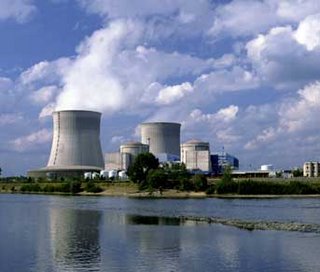 An action plan for "global energy security" to be agreed in St Petersburg next weekend envisages a network of nuclear fuel plants in G8 countries combined with the widespread sale of reactors to developing countries, as long as they promise not to use them for making nuclear bombs.
Read More Here
"Is nuclear energy the best way to solve climate change and give every country on Earth the ability to develop nuclear weapons a good idea?" I guess that question seems to have been answered affimatively.
You can sort of see that logic, however thin, whirling through neo-con minds. "Who would start a war if their opponent had the ability to nuke them? We're killing two birds with one stone!"
Fools! I need to start slapping me some fools.
image from greendiary.com
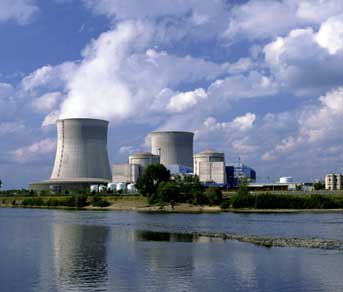 An action plan for "global energy security" to be agreed in St Petersburg next weekend envisages a network of nuclear fuel plants in G8 countries combined with the widespread sale of reactors to developing countries, as long as they promise not to use them for making nuclear bombs.
Read More Here
"Is nuclear energy the best way to solve climate change and give every country on Earth the ability to develop nuclear weapons a good idea?" I guess that question seems to have been answered affimatively.
You can sort of see that logic, however thin, whirling through neo-con minds. "Who would start a war if their opponent had the ability to nuke them? We're killing two birds with one stone!"
Fools! I need to start slapping me some fools.
image from greendiary.com
Friday, July 07, 2006
Congressman Ehlers votes against latest offshore drilling bill
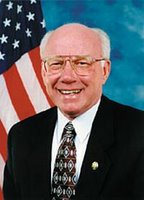
The Deep Ocean Energy Resources (DOER) Act (H.R. 4761) was recently passed by the House of Representatives by a vote of 232-187. The DOER Act would end a moratorium on exploration and drilling for oil and natural gas in the Outer Continental Shelf, which is under the domain of the federal government. However, the DOER Act is much more comprehensive than just removing this 25-year moratorium on drilling. My representative, Congressman Vernon Ehlers, voted against it.
Congressman Ehler's comments:
Yeah, thanks Congressman for voting against this bill. We need folks in congress who will vote against more oil spills and further global warming. We need folks in congress who see that our future is wind and solar, not petroleum. But apparently in the short term the assholes in the oil industry are going to get their way. Well, maybe it's time to send packing anyone who thinks in the old way. Maybe it's high time we throw out every member of Congress who is leading this country down the wrong path. Yeah, that's the ticket. There's 232 of them for certain, and we know who they are. So don't forget to vote!
Wanna support the destruction of the Outer Continental Shelf ecosystem? Here's the government's new propaganda website telling you how wonderful it's going to be: Pure Bullshit
Congressman Ehler's comments:
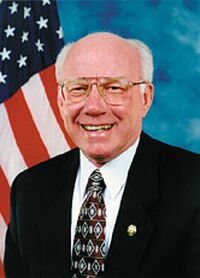
"One of my main concerns with the Act was a provision allowing oil and gas development to supersede any other type of activity deemed "incompatible" that may take place in the outer continental shelf. I was also concerned by language related to the cessation of state revenue-sharing due to the impact of any future federal laws that might alter or restrict drilling. These sections have the potential to imperil other marine industries such as shipping and fishing and I was very troubled by the breadth of the language."
"The Act also included a provision allowing coastal states that agree to allow drilling off their coasts to receive a large and increasing percentage of revenues from the leases in an area that typically has benefited the entire nation instead of a few number of states. While I am not opposed to states being involved in their coastal management, early estimates of the budget ramifications of the proposal suggest that we would lose $69 billion of federal revenues in the next 14 years. Furthermore, there are no reporting requirements governing how revenues to the states are spent. I believe very strongly that a substantial portion of both the federal and state revenues from this bill should be directed in a manner that seeks to reduce the high cost of fuel and our dependence on foreign oil through significant investment in the development of non-traditional energy sources and types of fuel. These funds should be devoted toward investing in research and development of energy efficient, renewable, and alternative energy sources that have the potential to reduce energy costs and international dependence. While I recognize a fossil-fuel energy supply system is necessary today, I believe that we have to provide resource opportunities for our kids and grandkids and prepare for the day when neither the OCS nor domestic or foreign sources can supply the fuel needs of our nation."
Yeah, thanks Congressman for voting against this bill. We need folks in congress who will vote against more oil spills and further global warming. We need folks in congress who see that our future is wind and solar, not petroleum. But apparently in the short term the assholes in the oil industry are going to get their way. Well, maybe it's time to send packing anyone who thinks in the old way. Maybe it's high time we throw out every member of Congress who is leading this country down the wrong path. Yeah, that's the ticket. There's 232 of them for certain, and we know who they are. So don't forget to vote!
Wanna support the destruction of the Outer Continental Shelf ecosystem? Here's the government's new propaganda website telling you how wonderful it's going to be: Pure Bullshit
Thursday, July 06, 2006
Robert Dean for State Legislature
This year's 4th of July passed without incident. Heck, I don't even remember putting on pants. I spent the day in front of the plasma with a never-ending supply of Bell's Kalamazoo Stout at hand (Think Global, Drink Local!). Then I grilled some steak, 'cause it seemed like a patriotic thing to do. A man should have a steak in honor of his country, and he should smother that steak in garlic. If he's really loving his country, he would dip that steak in some mango-papaya salsa and share part of it with his dog. We do have the best dogs in the world afterall... USA! USA! Ah, if only everyday could be the 4th of July. I love this country.
 So that's why I'm personally endorsing Robert Dean for the Michigan legislature. If you live on the northeast side of Grand Rapids, you have the chance to make a difference by electing a man who truly deserves your vote. Most of you won't recognize that name, but he's on his way up to the top and I'm going to jump on his gravy train. Dean is a Democrat, a father, and has been on the school board in Grand Rapids for several years. Most importantly to me, Mr. Dean has expressed in his campaign literature the importance of moving Michigan toward alternative energy and he opposes the sale of our water to giant bottling companies who are basically stealing it and selling it back to us at a buck and a half a liter.
My friends, if you're paying a buck fifty for a bottle of water from Mecosta County, Michigan, your a freakin' idiot. You need to seriously ask yourself why you're so damn stupid. It's water. It falls out of the sky.
Now, the wind and solar industries are Michigan's future, and I want a man in office who understands that. If you feel that stopping decent hard working gay men from getting married is more important than your children's future, you can vote for the Republican. But you would be making a serious mistake. That's a bit short-sighted, don't you think?
Mr. Dean is a man who works hard for his family, works hard for his kid's schools and who believes the future can be better for everyone if we turn toward wind power in Michigan. I want to shake Mr. Dean's hand when he wins. Hell, I want to run his campaign for Governor after he gets done in Congress.
I recently signed up to volunteer with Clean Water Action in Grand Rapids to assist in canvassing for Mr. Dean. You should too, it will do your heart good. Support someone who will actually make a difference.
Where to vote in Kent County, Michigan
 So that's why I'm personally endorsing Robert Dean for the Michigan legislature. If you live on the northeast side of Grand Rapids, you have the chance to make a difference by electing a man who truly deserves your vote. Most of you won't recognize that name, but he's on his way up to the top and I'm going to jump on his gravy train. Dean is a Democrat, a father, and has been on the school board in Grand Rapids for several years. Most importantly to me, Mr. Dean has expressed in his campaign literature the importance of moving Michigan toward alternative energy and he opposes the sale of our water to giant bottling companies who are basically stealing it and selling it back to us at a buck and a half a liter.
 My friends, if you're paying a buck fifty for a bottle of water from Mecosta County, Michigan, your a freakin' idiot. You need to seriously ask yourself why you're so damn stupid. It's water. It falls out of the sky.
Now, the wind and solar industries are Michigan's future, and I want a man in office who understands that. If you feel that stopping decent hard working gay men from getting married is more important than your children's future, you can vote for the Republican. But you would be making a serious mistake. That's a bit short-sighted, don't you think?
Mr. Dean is a man who works hard for his family, works hard for his kid's schools and who believes the future can be better for everyone if we turn toward wind power in Michigan. I want to shake Mr. Dean's hand when he wins. Hell, I want to run his campaign for Governor after he gets done in Congress.
I recently signed up to volunteer with Clean Water Action in Grand Rapids to assist in canvassing for Mr. Dean. You should too, it will do your heart good. Support someone who will actually make a difference.
Where to vote in Kent County, Michigan
Subscribe to:
Posts (Atom)